
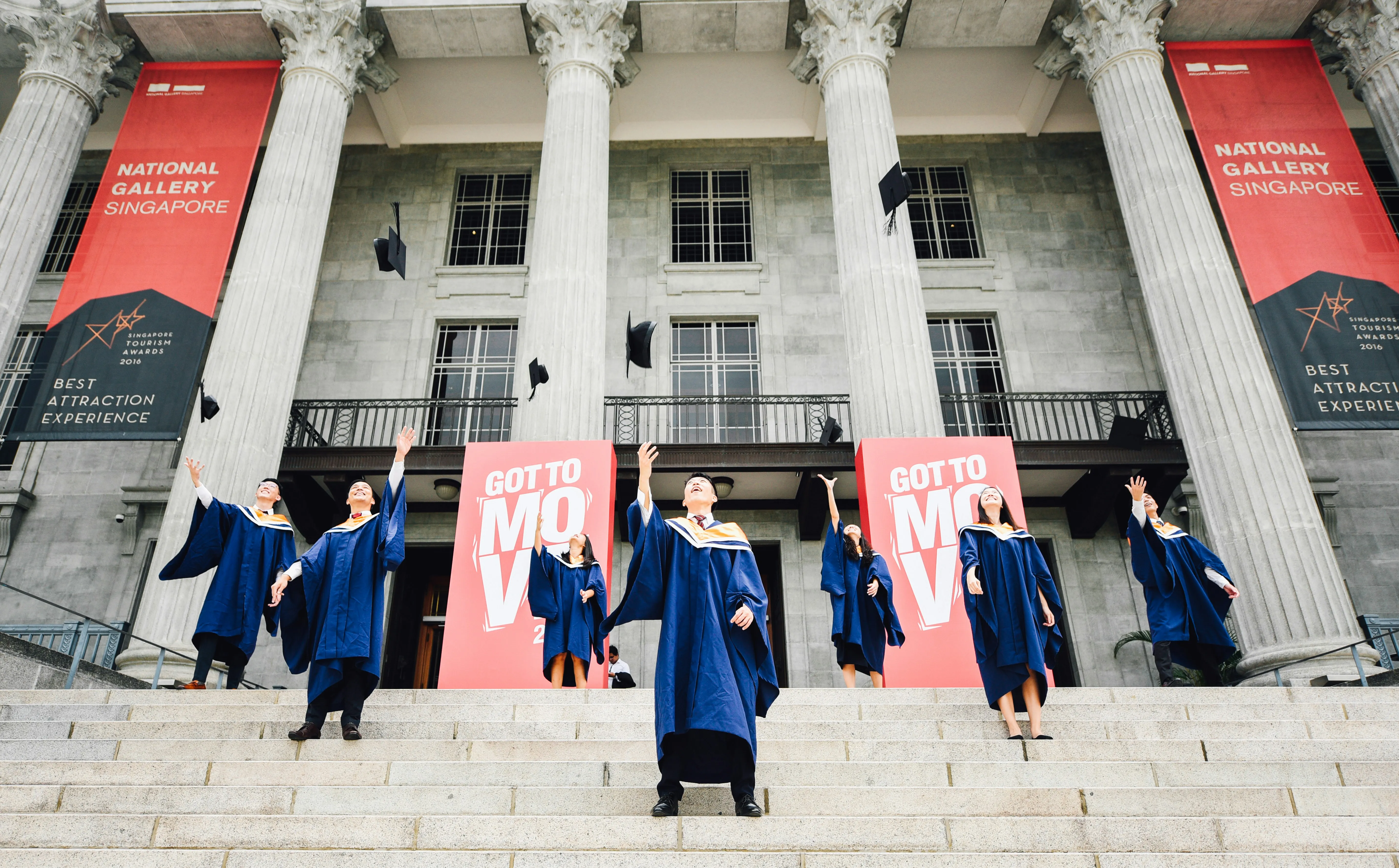
Singapore is not a country with a shortage of educated graduates.
It is, increasingly, a country where graduates are spending longer than expected finding their first job after leaving one of the world's most respected university systems.
The average time-to-first-employment for Singapore polytechnic and university graduates has lengthened over the past eighteen months. This is not a story about qualifications — Singapore credentials remain globally recognised and valued. It is a story about a structural mismatch between what the market wants right now, and how graduates have been prepared to demonstrate that they can deliver it.
The three things behind the longer search
The skills gap has moved. It is no longer enough to have a degree in a relevant field. Singapore employers — particularly in financial services, tech, and professional services — are expecting graduates to arrive with applied, demonstrable skills in AI-augmented workflows, data interpretation, and domain-specific tools. Degrees certify knowledge. They do not always certify capability. And the gap between the two is where many searches stall.
The market has become more selective, not less competitive. There are jobs in Singapore. The issue is that employers are taking longer to make decisions and are being more rigorous about who they select. A three-stage interview process has become a four or five-stage one. A two-week offer timeline has stretched to six or eight weeks. For graduates who expected a faster transition, this creates both financial pressure and a crisis of confidence.
Employer brand asymmetry is widening. The most sought-after employers are more visible than ever — and they are receiving disproportionately high volumes of applications. Meanwhile, strong smaller employers who may be excellent fits for many graduates remain invisible on campus. Career services teams often lack the resources to bridge this gap effectively without platform support.
What this costs in the long run
Extended unemployment after graduation is not just a personal problem. It has measurable consequences for institutions.
Graduate employment rates at six months are a key metric for both the Ministry of Education's Graduate Employment Survey (GES) and accreditation bodies. Institutions whose graduates take longer to find work see this reflected in rankings, in employer perception, and increasingly in student enrolment decisions.
The institutions that protect their graduate employment outcomes in a selective market are the ones that invested in employer connectivity before their students graduated — not after.
Alumni networks, industry mentorship programmes, and structured employer engagement through careers fairs and placement partnerships are not soft initiatives. In this environment, they are competitive infrastructure.
What institutions can do right now
The most effective interventions are not reactive. They do not begin when a student is six months from graduation and struggling to find interviews. They begin in year one — and they run through to post-graduation support.
Specifically, institutions that are seeing stronger graduate employment outcomes in 2026 are doing several things differently:
- Embedding career readiness into curricula, not treating it as a standalone elective in the final semester
- Activating alumni mentorship early, connecting first and second-year students with working graduates who can provide realistic industry insight and warm introductions
- Running structured employer engagement programmes throughout the academic year, not just at careers fairs
- Tracking graduate outcomes longitudinally, so career services teams can identify where graduates are getting stuck and intervene with targeted support
- Building cross-institutional employer databases that surface smaller and mid-market employers alongside the big brand names
The opportunity in the problem
The graduate employment gap in Singapore is a problem — but it is a solvable one. And the institutions that solve it well will have a genuine competitive advantage in the years ahead.
Singapore's graduate talent is genuinely strong. The credentials are real. The work ethic is evident. What has not kept pace is the infrastructure connecting that talent to the market — and that is something institutions can directly influence.
The quiet crisis does not have to stay quiet. It just requires the right systems, the right relationships, and the willingness to act before the problem becomes a metric.